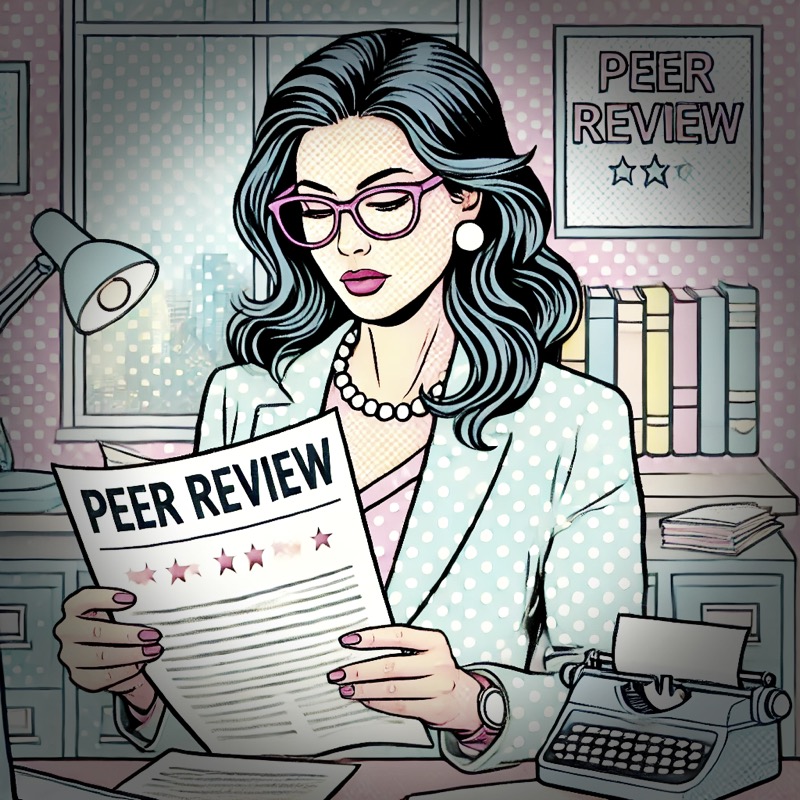
I just spent two hours writing detailed feedback on a paper I was reviewing. As I clicked “submit,” that familiar academic anxiety crept in: Was I being helpful, or just adding to the weight of academic criticism that we all carry?
The paper had potential – an interesting premise that could contribute to our field. But it needed work. Substantial work. The methodology wasn’t fully developed, the focus wandered, and the conclusions didn’t quite align with the evidence presented. So I did what I thought was the kind thing: I recommended “Major Revisions” and wrote detailed suggestions for improvement, complete with recommended readings and methodological adjustments.
But here’s the thing about kindness in academia – it’s complicated. As I sat there looking at my lengthy feedback, I started second-guessing myself. Would the author see this as the supportive gesture I intended, or would they see yet another “Reviewer 2” picking their work apart? Would my carefully worded suggestions feel like a helping hand, or would they land as just another voice telling them they’re not good enough?
It’s that classic academic dilemma: How do we balance rigour with kindness?
The “easy” kind option might have been to recommend acceptance with minor revisions. After all, wouldn’t that be nicer? Less stressful for the author? But then I remember my own teaching philosophy – true kindness isn’t about making things easier, it’s about supporting growth. If I accept work that isn’t ready, am I really serving the author, the journal, or the wider academic community?
The “traditional” academic option would have been a straight rejection with a brief explanation. Clean, quick, efficient. But is it kind to leave someone without a roadmap for improvement? Without acknowledging the potential in their work?
This is where I think we need to have an honest conversation about what kindness looks like in peer review. Because maybe, just maybe, detailed constructive feedback is the kind option – even when it feels hard to give and receive.
Think about it this way:
- When we give specific, actionable feedback, we’re saying “I see potential in your work”
- When we provide resources and suggestions, we’re saying “I want to help you succeed”
- When we take time to explain our reasoning, we’re saying “Your work deserves careful consideration”
But – and this is important – we need to actually say these things. Explicitly. Because in the lonely process of receiving feedback, it’s too easy to read “needs major revision” as “not good enough” and “here are fifteen suggestions for improvement” as “let me count the ways you’ve failed.”
Maybe the key to kind peer review isn’t in what we say, but in how we frame it. Perhaps we need to be more explicit about our intentions:
- “I’m providing detailed feedback because I see value in your research question…”
- “These suggestions come from a place of wanting to help strengthen your argument…”
- “I’m recommending major revisions because I believe this work has the potential to make a significant contribution…”
Because here’s what I’ve realised: Kindness in peer review isn’t about softening the blow or avoiding criticism. It’s about creating a space where academic rigour can coexist with human connection. Where we can acknowledge both the work that needs to be done and the effort that’s already been invested.
So yes, I submitted that detailed feedback. And yes, I recommended major revisions. But I also made sure to acknowledge the paper’s potential, to explain my reasoning, and to frame my suggestions as possibilities rather than prescriptions. Because maybe that’s what kind peer review looks like – not an absence of criticism, but the presence of support.
After all, isn’t that what we’re all looking for in academia? Not just judgment of our work, but partnership in making it better?







 The Kind Academic
Leave a reply to Gwar Cancel reply