
As we’re heading towards the end of our academic year, I’m finally taking some time to breathe the year out. 🧘🏽♀️
I’m embracing the slower pace because this term, I faced one my biggest teaching challenges yet.. literally! I convened a course with 1688 students – my largest course yet. That’s 1688 humans to keep engaged, stimulated and motivated.
In preparation, I spent a lot of time spiralling down YouTube rabbit holes, watching video after video on how to support large classes. (Because nothing screams productivity like staring at your phone with dead eyes in the wee hours.)
One video with a kajillion likes suggested varying your strategies to keep so many people motivated. The presenter said, “Sometimes you need the carrot, sometimes you need the stick.”
This immediately niggled at me. Surely this whole carrot-and stick metaphor is outdated by now? Why are we still talking about motivating students like we’re training animals?
Those of us who have been teaching forever have come to rely on certain ways of getting students to do (and not do) things:
- Rewards for good performance
- Penalties for poor performance
- “Do this and get that”
- “Don’t do this or else…”
Sure, this is simple and clean… but it’s also completely inadequate for the complex reality of learning in higher education.
So, what if we thought about motivation differently?
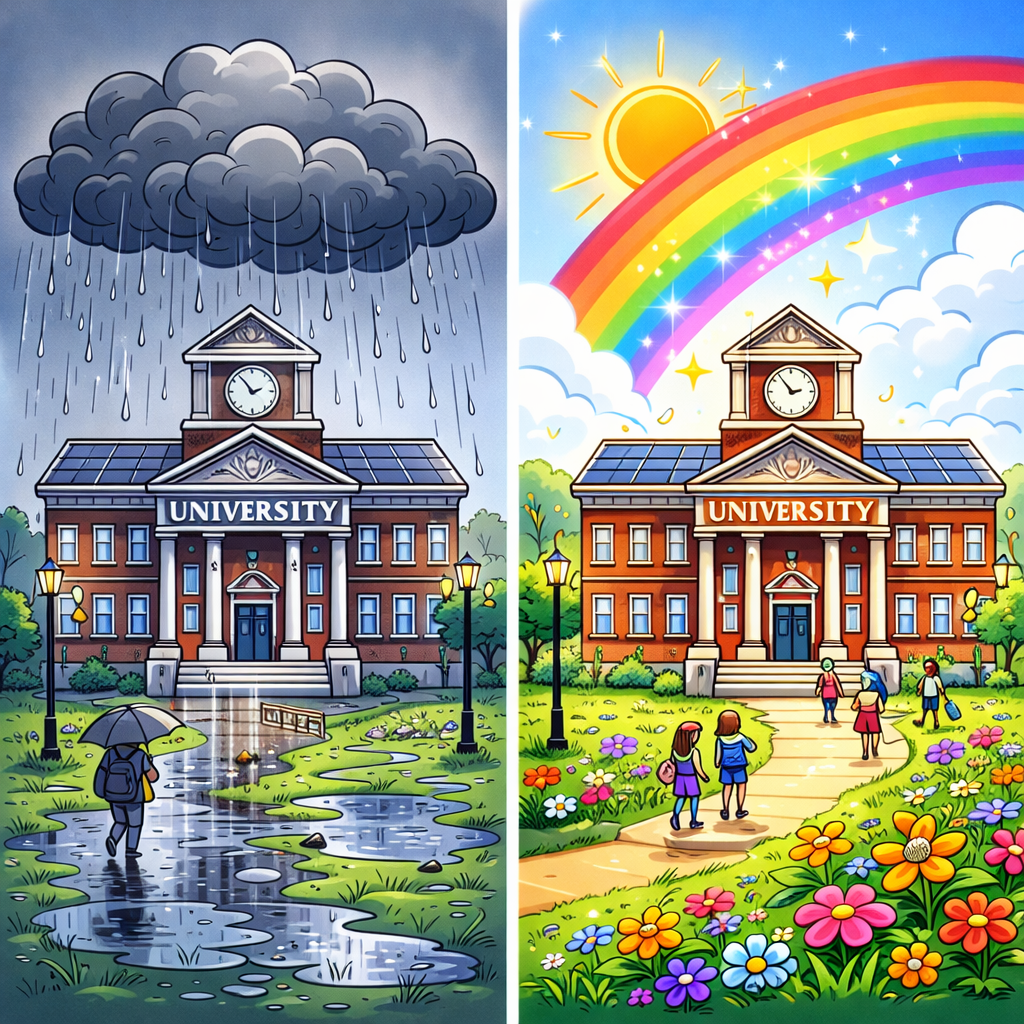
Instead of carrots and sticks, what if we thought about learning as tending a garden? Gardens don’t grow because we reward or punish them. They grow because we create the right conditions:
- Rich soil
- Adequate water
- Appropriate light
- Protection from harsh elements
“But how do you tend a garden with 1688 plants?”
It’s definitely not easy, but this term with my new garden metaphor top of mind, I tried to explicitly integrate strategies to promote learning in my classes.
Instead of asking “How do I make students do the work?” I started asking “What conditions do my students need to flourish?”
This isn’t about making things easier. Gardens still require work:
- Careful attention
- Regular maintenance
- Occasional pruning
But the energy shifts from control to cultivation, from compliance to growth. This is what kindness in academia looks like: not lowering our standards, but creating conditions where everyone can reach them.
What we can do is create conditions where:
- Learning feels natural
- Curiosity has room to take root
- Understanding has time to bloom
Yes, even in a garden of 1688 students.
Isn’t it time we put down our carrots and sticks? Our students aren’t donkeys to be led, they’re minds to be nurtured.
After all, the most vibrant gardens don’t grow because of rewards or punishments – they grow because someone took the time to create the right conditions for growth. 🌹 🪷 🌻 🌷 🌼



 The Kind Academic
Leave a comment